
Teeth Contouring & Reshaping Singapore
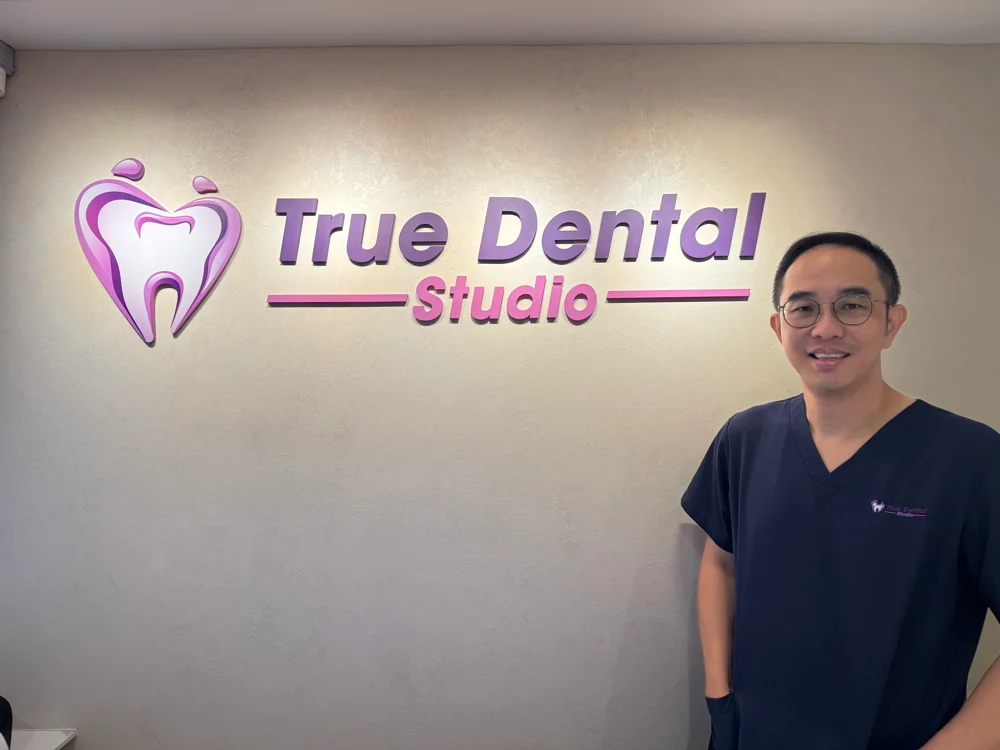
Small changes, big difference — Reshape uneven, pointed or chipped tooth edges in a single visit, without adding anything to your natural teeth.
- Price: From $54.50 NETT per tooth.
- Treatment Duration: Usually one visit, depending on whether other treatments are combined.
What Is Teeth Contouring?
Teeth contouring is a cosmetic dental procedure that removes a small amount of enamel to
change the shape, length or surface of a tooth. It smooths uneven edges, rounds
pointed canines and blends chipped corners back into the natural outline of the tooth. In dental
terms the procedure is called enameloplasty or odontoplasty.
The amount of enamel involved is minimal. Usually less than a millimetre is removed, and often
only a few tenths of a millimetre, using a fine polishing bur or abrasive strip. Because the work
stays within the outer enamel layer, which contains no nerve supply, most people need no
anaesthetic and the treatment is completed in one appointment.
Teeth contouring changes shape by taking material away. It does not add anything to the tooth,
which is what separates it from bonding and veneers.

What Teeth Contouring Can Correct
Teeth contouring corrects small, surface-level irregularities in teeth that are otherwise healthy.
Because the procedure only removes enamel, the change it can make is limited to what a fraction of a
millimetre allows.
It is commonly used for:
- Front teeth of different lengths — Teeth contouring levels front teeth that sit at slightly different heights so the edges follow a smoother line. This includes uneven edges and small triangular gaps left after orthodontic treatment such as braces or Invisalign.
- Sharp, pointed canine teeth — Canine tips that look prominent are rounded to sit more evenly alongside the neighbouring teeth.
- Chipped tooth corners — A chipped corner can be blended back into the natural outline of the tooth, along with shallow grooves or pits in the enamel surface.
- Jagged edges on new adult teeth — Newly erupted front teeth often have small bumps along the biting edge, known as mamelons, which polish away easily.
- Teeth that slightly overlap — Where one tooth sits a little in front of another, teeth contouring narrows the contact point to reduce the visible overlap.
It cannot correct problems that need material added or teeth moved. Significant crowding, gaps between teeth, a rotated tooth, deep discolouration and large fractures all fall outside what contouring can achieve. In those cases we would recommend orthodontic treatment, bonding, veneers or a crown instead.
WhatsApp Us Now
How Teeth Contouring Work: The Process
Teeth contouring is typically completed in a single appointment and follows four steps, from an initial X-ray assessment through to polishing the reshaped edges.
- Assessment and X-ray — Your teeth are examined and an X-ray taken to check enamel thickness and how close the pulp sits to the surface. This determines how much enamel can be removed without exposing the inner layers of the tooth.
- Marking the plan — The teeth selected for reshaping are marked and the intended shape is discussed with you before any enamel is touched.
- Reshaping — A fine dental bur, disc or abrasive strip removes enamel gradually, taking off a little at a time. The shape is compared against your neighbouring teeth at each stage rather than reshaping the tooth in one go.
- Smoothing and polishing — The reshaped surfaces are polished until they match the sheen of the surrounding enamel, and your bite is checked to confirm your teeth still meet correctly.

Most teeth contouring appointments take between 20 minutes and an hour depending on how many teeth are involved.
Teeth Contouring vs Dental Bonding and Veneers
Teeth contouring removes material from a tooth, while dental bonding and veneers
add material to it. Contouring shaves away a thin layer of enamel, bonding builds a
tooth up with tooth-coloured resin, and veneers cover the front surface with a custom shell.
Because contouring works by taking material away, it is frequently a preparatory step for
bonding or veneers rather than an alternative to them. It reshapes a tooth that is already
close to the shape you want, and the result is permanent because enamel does not grow back. Where more material is needed than the
tooth already has, such as closing a gap or rebuilding a larger chip, bonding or veneers do the work
instead.
Contouring and bonding are often used in the same appointment. A long edge on one tooth may be smoothed
while resin is added to a shorter tooth beside it, so both arrive at the same outline.
Potential Side Effects of Teeth Contouring
Teeth contouring is a widely used procedure with a limited range of side effects, most of them short-lived.
- Temporary sensitivity — Hot, cold or sweet foods may feel sharper for a few days to a few weeks as the freshly exposed enamel surface settles.
- Altered sensation — The reshaped tooth can feel different against your tongue or lip for a short while. If it still feels rough after a week, a brief polishing appointment will usually smooth it.
- Weakened enamel — Taking away more enamel than the tooth can spare leaves it more prone to chipping and to sensitivity that does not settle.
- Bite changes — Reshaping an edge that guides your bite, particularly a canine, can alter how your teeth meet and cause discomfort in the jaw if not checked and adjusted.
- Pulp irritation — Reshaping that goes deeper than the enamel layer can leave the inner tissue of the tooth inflamed and in need of further treatment. This is rare, as enamel depth is checked on an X-ray beforehand.
Consult your dentist if sensitivity persists beyond a few weeks or if your bite feels uneven after the appointment, as both are straightforward to review.
Caring for Your Teeth After Contouring
No special aftercare is needed after teeth contouring, as only the outer enamel is reshaped and there is no wound to heal. You can eat, drink and return to your usual routine on the day of the appointment.
A few habits help protect the reshaped enamel:
- Use a fluoride toothpaste – Fluoride helps strengthen the enamel surface, which matters more once a thin layer has been removed.
- Choose a soft-bristled brush – Firm bristles and heavy pressure wear enamel down over time.
- Avoid using your teeth as tools – Biting nails, pens, ice or packaging puts point loads on the reshaped edges.
- Wear a night guard if you grind – Grinding is the fastest way to wear down enamel that has already been reduced.
- Keep to regular check-ups – Six-monthly reviews let your dentist monitor enamel thickness and sensitivity in the reshaped teeth.

Contouring is one of the simplest ways to refine a smile. There is no downtime, no anaesthetic for most people, and the result is visible straight after the appointment.

Dr Tay Chih Kien
Teeth Contouring Cost in Singapore
At True Dental Studio, our pricing for contouring and related cosmetic treatments is as follows:
| Treatment | Price* |
|---|---|
| Consultation | $27.25 to $65.40 |
| Dental X-ray | From $35.97 |
| Teeth Contouring (Enameloplasty) | From $54.50 per tooth** |
| Dental Bonding | $218 to $327 |
| Dental Veneers | From $327 |
| Teeth Whitening | From $359.70 to $1,308 |
| Invisalign | $3,924 to $9,810 |
*Prices are NETT and inclusive of GST.
**Every contouring treatment starts with a detailed assessment. Our dentist will look at how your
teeth function, how they look and their overall health before proposing a treatment plan, so the
final cost depends on how many teeth need reshaping.
How Do I Book a Teeth Contouring Appointment?
Book Teeth Contouring Appointment
Book NowEnquire More Through Email
Email Us NowEnquire More Through WhatsApp
WhatsApp Us NowWhy Choose True Dental Studio?
Friendly Dentist and Team
We treat every patient to the best of our ability. This is why families across Singapore have continued their dental care with us for years.
Minimal Discomfort
We are committed to keeping our patients as comfortable as possible, minimising any discomfort during treatment.
Affordable Treatments
We believe in pricing quality treatments at a competitive rate. We are transparent and upfront with our treatment costs.
Our Smile Scorecard
Frequently Asked Questions
Teeth reshaping is widely considered a low-risk procedure when carried out on healthy teeth with sufficient enamel. An X-ray is sometimes taken beforehand to check enamel thickness and how close the pulp sits to the surface, which determines how much can be removed. Removing too much enamel leaves the tooth more prone to chipping and to sensitivity that does not settle. Your dentist will assess whether reshaping suits your teeth and discuss this with you before proceeding.
Teeth contouring is not usually painful, as the work stays within the enamel, which contains no nerves. Most people need no anaesthetic, though some notice temporary sensitivity to hot, cold or sweet foods for a few days afterwards. If you already have sensitive teeth, let your dentist know so this can be taken into account when planning how much enamel to remove.
Teeth contouring is generally not covered by insurance in Singapore, as it is classified as a cosmetic procedure rather than a clinically necessary one. Reshaping carried out for functional reasons, such as adjusting a tooth that interferes with your bite, may be treated differently. Checking your policy details or speaking to your insurer before treatment can help you avoid unexpected costs.
Teeth contouring is carried out by dentists, and no specialist referral is normally needed for straightforward cases. Orthodontists may also perform a form of it during braces or Invisalign treatment, known as interproximal reduction, to create space for teeth to move. Where reshaping forms part of a wider cosmetic plan alongside bonding or veneers, it is usually handled by a dentist who works regularly with these treatments.
Teeth contouring produces a visible but subtle change, since the dentist works within the thickness of the enamel. What shows most is the edge line across the front teeth: levelling two or three edges, or rounding a pointed canine, alters how balanced the smile reads without any single tooth looking dramatically different. Where a larger change is wanted, bonding can add resin to reshape a tooth, and veneers can cover it entirely.
Teeth contouring is permanent, as enamel does not regenerate once removed. The tooth cannot be returned to its original shape, and any future change would need material added through bonding or a veneer rather than taken away. This is why only a small amount is removed and an X-ray is taken beforehand. The reshaped tooth itself needs no upkeep, though enamel can wear over time through grinding or acidic diets.
The cost of reshaping a tooth in Singapore varies according to how many teeth are involved, whether X-rays are needed, and whether reshaping is done alone or alongside bonding, whitening or orthodontic treatment. At True Dental Studio, tooth reshaping starts from $54.50 NETT per tooth, with a consultation ranging from $27.25 to $65.40. The final fee is confirmed once your teeth have been examined.
The main downside of teeth reshaping is that it cannot be undone, since enamel does not grow back. The scale of change is also limited, as only a fraction of a millimetre can be removed from each tooth. Temporary sensitivity is also common in the first few weeks, and removing too much enamel can weaken the tooth or alter how your bite meets.
Teeth reshaping can be worth it for the difference a small change makes. Evening out an uneven edge or rounding a pointed canine often makes a smile look more balanced, and the result is visible in a single visit with no downtime. For gaps, crowding or discolouration, bonding, veneers or orthodontic treatment would achieve more. An assessment will show what reshaping can realistically change for your teeth.
Teeth cannot be reshaped naturally or at home, and attempting to do so is strongly advised against. Enamel is the hardest tissue in the body and cannot be filed, ground or worn down safely without dental equipment. Using nail files or abrasives risks permanent damage, lasting sensitivity and exposure of the inner layers of the tooth.