
Ever noticed a small gap between your teeth in the mirror and wondered if anyone else sees it too?
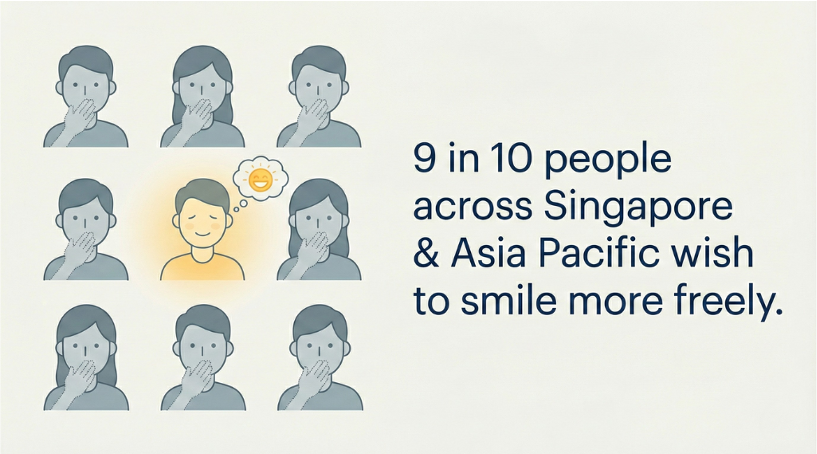
You are far from alone. Across Singapore and the Asia-Pacific, 94 per cent of people say they wish they could smile freely, often because of how their teeth look.
Maybe you see the gap as part of your character, or maybe it is the one thing you would change. Either way, a diastema raises real questions about appearance, confidence, and dental health, and there are clear answers about what causes it, what it means, and what you can do about it.
What Is Diastema?
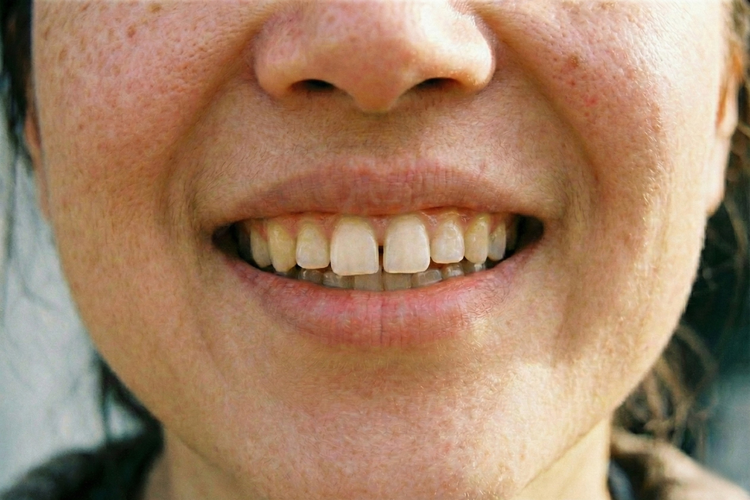
Diastema refers to a space or gap between two teeth, most commonly
between the upper front teeth. While often viewed as a cosmetic concern, it can also
result from underlying dental or oral health issues.
The condition can occur in both children and adults, and may affect the front or
back teeth depending on the cause.
What Are the Types of Diastema?
Diastema can be classified into different types based on where the gap appears and what causes it:
- Midline Diastema — A gap between the two upper front teeth, which is the most common type.
- Generalised Spacing — Multiple gaps between several teeth, often caused by small teeth, a large jaw or both.
- Localised Diastema — A single gap caused by specific factors such as a missing tooth or an enlarged frenum (the tissue band that connects the inside of the lip to the gum).
What Causes Diastema?
Diastema can develop due to a combination of physical traits, oral habits and dental health issues. Common causes include:
| Cause | Description |
|---|---|
| Mismatch between tooth and jaw size | When the teeth are too small for the jawbone, extra space may form between them. |
| Genetic predisposition | Diastema may run in families, especially when there are inherited differences in tooth and jaw proportions. |
| Missing or undersized teeth | The absence of certain teeth, or teeth that are smaller than normal, can cause neighbouring teeth to shift and create gaps. |
| Enlarged labial frenum | A thick tissue band connecting the upper lip to the gum may extend between the front teeth, preventing them from coming together naturally. |
| Thumb sucking or tongue thrusting | These behaviours place pressure on the front teeth, which can gradually push them apart. |
| Periodontal (gum) disease | In advanced stages, gum disease can lead to bone loss around the teeth, resulting in movement and spacing. |
Is Diastema a Cause for Concern?
A diastema is not always a cause for concern, but it can affect appearance, function or signal an underlying issue. Some gaps may remain stable and require no treatment, while others may widen or lead to oral health complications over time. Treatment may be considered if:
- You feel self-conscious about your smile
- The gap is widening or changing
- You experience food trapping or speech difficulties
- It is linked to gum disease or bite imbalance
WhatsApp Us Now
How Is Diastema Diagnosed?
Diastema is usually identified during a routine dental check-up. If underlying
causes are suspected, further evaluation may include X-rays
to assess bone levels, as well as checks for gum disease, tooth alignment and
contributing factors such as oral habits or an enlarged frenum.
In some cases, digital scans or dental models may be used to support treatment
planning.
What Are the Treatment Options for Diastema?
Treatment for diastema depends on the cause, severity and individual aesthetic goals. Some gaps may not require treatment if they are small, stable and not associated with other dental issues. However, if treatment is wanted or needed for health reasons, several options are available:
Orthodontic Treatment
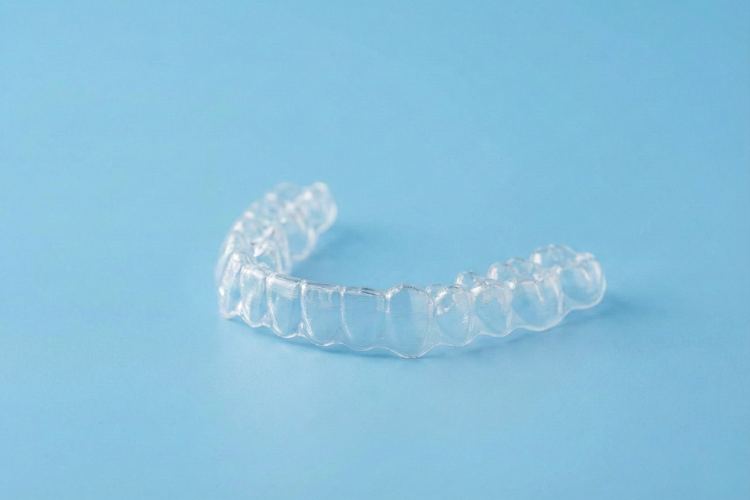
Orthodontics such as braces or Invisalign® clear aligners gradually move
the teeth into better alignment and are commonly used to close gaps,
especially larger ones or cases involving multiple teeth.
Suitable for: Moderate to large gaps or multiple spacing
issues
Treatment duration: 12 to 18 months, depending on case
complexity
Longevity: Long-term with proper retainer use
Dental Bonding
Dental bonding involves
applying a tooth-coloured resin to the surface of the teeth to fill small gaps.
Suitable for: Small to moderate gaps without bite issues
Treatment duration: Single visit
Longevity: 5 to 10 years
Veneers
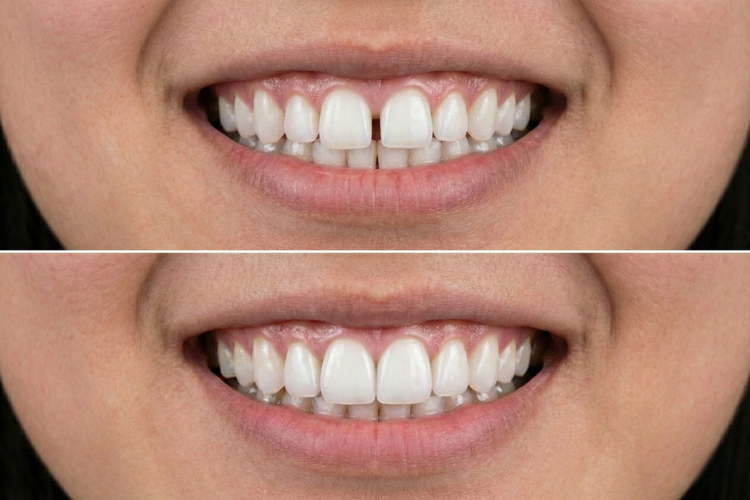
Porcelain or composite veneers can cover gaps while also improving the
appearance of tooth shape or colour. Veneers are custom-made and bonded to
the front surface of the teeth.
Suitable for: Cosmetic improvement of gaps in the front
teeth
Treatment duration: 1 to 2 weeks (typically one to two
visits)
Longevity: 10 to 15 years or more (porcelain), 5 to 7 years
(composite)
Crowns
Crowns are full-coverage restorations
that encase the entire tooth and may be used to reshape teeth and close gaps when
there is structural damage.
Suitable for: Teeth with structural issues or large restorations
Treatment duration: 1 to 2 weeks
Longevity: 10 to 15 years
Dental Implants or Bridges
For gaps caused by missing teeth, implants or bridges can restore both appearance
and function. Implants are surgically placed, while bridges are supported by
neighbouring teeth.
Suitable for: Gaps resulting from missing teeth
Treatment duration: 4 to 6 months (implants), 1 to 2 weeks
(bridges)
Longevity: Decades (implants), 5 to 15 years or more (bridges)
Frenectomy (If Caused by Enlarged Frenum)
If a thick frenum is the cause of a midline diastema, a minor surgical procedure called a frenectomy may be performed to release the tissue. Orthodontic treatment may follow to close the gap.
How Much Does Diastema Treatment Cost?
At True Dental Studio, we offer a range of dental treatments for diastema (tooth gaps), with prices as follows:
| Treatment | Prices* |
|---|---|
| Consultation | $27.25 to $65.40 |
| Cosmetic Dentistry | |
| Invisalign | $3,924 to $9,810 |
| Dental Bonding | $218 to $327 |
| Dental Veneers | From $327 |
| Restorative Dentistry | |
| Dental Bridge | $1,199 to $1,635 |
| Dental Crown | $1,199 to $1,635 |
| Dental Implant | From $3,815 |
*Prices are NETT and inclusive of GST.
Can Diastema Be Prevented?
Some cases of diastema can be prevented, especially when related to oral habits or gum health. Things that may help include:
- Keeping up with good oral hygiene to reduce the risk of gum disease and bone loss
- Going for regular dental check-ups to catch spacing issues early
- Managing tongue thrusting or speech-related habits early with the right support
- Avoiding thumb sucking or prolonged pacifier use in children
However, gaps caused by genetics or natural differences in tooth and jaw size cannot be prevented.
Book a Consultation for Diastema
Book Diastema Consultation
Book NowEnquire More Through Email
Email Us NowEnquire More Through WhatsApp
WhatsApp Us Now
Over 30% of adults feel anxious about dental visits.
Dental visits can indeed be stressful, but at True Dental Studio, we are gentle and patient, committed to helping you feel at ease during your visit.

Dr Tay Chih Kien
Why Choose True Dental Studio?
Friendly Dentist and Team
We treat every patient to the best of our ability. This is why families across Singapore have continued their dental care with us for years.
Minimal Discomfort
We are committed to keeping our patients as comfortable as possible, minimising any discomfort during treatment.
Affordable Treatments
We believe in pricing quality treatments at a competitive rate. We are transparent and upfront with our treatment costs.
Our Smile Scorecard
Frequently Asked Questions
The most common cause of diastema is a mismatch between tooth size and jaw width, which creates extra space between teeth. It may also result from genetics, missing or undersized teeth, gum disease, an enlarged frenum (the tissue connecting the inside of the lip or cheek to the gums), or oral habits such as thumb sucking. In many cases, more than one factor contributes to the gap, so identifying the exact cause requires a dental examination.
A diastema can often be closed through treatments such as orthodontics, bonding, veneers or crowns, depending on its cause and severity. While small, stable gaps may not need treatment, others can affect appearance or function. If you're unsure whether your gap needs attention, consult your dentist for a personalised assessment and treatment recommendations tailored to your smile.
Braces are commonly used to fix diastema by gradually moving the teeth into proper alignment, especially when gaps are moderate to large or involve multiple teeth. Clear aligners like Invisalign may also be suitable depending on the case and preference for a more discreet option. If you're unsure which treatment is right for you, consult a dentist or orthodontist to assess your bite and spacing and recommend the most appropriate approach.
There are no natural methods proven to close a diastema without dental treatment. Addressing habits like thumb sucking or tongue thrusting may help prevent the gap from worsening, but these changes alone rarely close an existing gap. If the space is a concern, consult your dentist to evaluate the underlying cause and recommend appropriate treatment options.
Gap teeth have different meanings across cultures. In some traditions, they are seen as signs of beauty, luck or uniqueness, while in others they may be viewed as flaws. These beliefs are symbolic and vary by region, not medical. Whether to treat a diastema depends on individual preference, cultural background and whether it contributes to dental issues like gum disease, bite imbalance or speech problems.
Gaps in teeth can result from a mismatch between tooth and jaw size, missing or undersized teeth, gum disease, or habits like thumb sucking or tongue thrusting. A thick or low-positioned frenum, which is the tissue connecting the upper lip to the gum, can also prevent the front teeth from closing. In many cases, genetics influence these factors, making some people more prone to spacing.
Braces can close gaps caused by spacing or alignment issues, but they do not replace missing teeth. If a tooth is absent, braces may help shift surrounding teeth to reduce the space, though this approach may not always be ideal. In such cases, treatments like dental implants or bridges may be more suitable. If you're unsure which option fits your needs, consult your dentist or orthodontist for a personalised assessment.
Diastema is relatively common in both children and adults. It often appears during childhood as a normal part of dental development and may close naturally when permanent teeth erupt. In adults, gaps can persist or form later due to spacing imbalances, oral habits, or gum disease. While not uncommon, its causes and presentation can vary widely.
Dental bonding is typically the most affordable option for closing small to moderate gaps. It involves applying tooth-coloured resin to the teeth and is usually completed in a single visit. However, it may not be ideal for larger gaps or bite-related issues. Other treatments like veneers, crowns, or orthodontics (e.g. braces or clear aligners) may offer longer-lasting or more comprehensive results. If you are unsure, consult your dentist to determine what suits your needs.
Gap teeth can be influenced by genetics, especially when differences in jaw size, tooth size or tooth number are inherited. For example, a person may inherit a wider jaw from one parent and smaller teeth from another, leading to gaps. While genetics are a common cause, other factors such as oral habits, gum disease and tooth development can also play a role.
Invisalign can be used to fix a diastema by gradually shifting teeth closer together with clear aligners. It is often chosen for aesthetic reasons as it is discreet and suitable for mild to moderate gaps. However, Invisalign may not be appropriate for all cases, particularly when complex bite issues or severe spacing are involved. If you are unsure, a dentist or orthodontist can assess whether Invisalign is a suitable option for your specific condition.
Gaps often appear in early childhood when baby teeth fall out and permanent teeth are still emerging. Many of these gaps close naturally over time. In adults, diastemas may form due to shifting teeth, gum disease or missing teeth. If a gap appears suddenly or changes in size, it should be assessed by a dentist to rule out underlying dental issues.
Gaps between teeth can be reduced or covered using bonding, veneers, crowns or orthodontics, depending on the cause and size of the space. Each option differs in cost, durability and suitability. If you are unsure, consult your dentist for an assessment to determine the most appropriate method that addresses both function and appearance based on your goals.
Gaps may look more noticeable after deep cleaning (a procedure to remove plaque and tartar beneath the gums) because inflamed or swollen gums shrink back to a healthier state, and hardened plaque between teeth is removed. This can expose spaces that were previously hidden by puffiness or buildup. These are not new gaps but existing spaces that become more visible as gum and tooth surfaces return to normal.